Kochi Prefecture is the largest prefecture in Shikoku, yet it has the smallest population. Most of its vast territory is covered by mountains and coastline that remain genuinely wild. It is far from everywhere — and that distance is precisely what makes it special.
This is a place where you find Japan’s cleanest river, the island’s southernmost cape, one of its most extraordinary food cultures, and a cast of historical figures whose lives shaped the modern nation. However, Kochi does not advertise itself loudly. It rewards travelers who make the effort to come.
This guide covers everything you need to plan a trip to Kochi Prefecture — from the top attractions and food experiences to getting around and where to stay.

Contents
Why Visit Kochi?
Kochi Prefecture offers three things that are genuinely hard to find elsewhere in Japan.
First, nature on a grand scale. The Niyodo River — Japan’s cleanest — glows with a blue-green color that seems almost artificial. The Shimanto River flows undammed through a landscape of rice paddies and forest that has barely changed in generations. Cape Ashizuri drops over 80 meters to the Pacific at the southern tip of Shikoku. Cape Muroto, a UNESCO Global Geopark, sits on one of the fastest-rising coastlines on the planet. This is not scenery you admire from a distance — it is scenery you walk into.
Second, a food culture unlike anywhere else in Japan. Kochi’s drinking and dining traditions — rooted in the “okyaku” philosophy of radical hospitality — have produced a culinary scene that is bold, generous, and deeply local. Straw-seared bonito, wild river eel, whale cuisine, fresh citrus: the flavors here are as distinctive as the landscape.
Third, history with real weight. Sakamoto Ryoma, who helped dismantle the feudal order and open Japan to the modern world, was born here. John Manjiro, the first Japanese person to live in America, grew up on this coast. Kukai — the monk who founded Shingon Buddhism and walked the Shikoku Pilgrimage — had his moment of enlightenment in a sea cave on Cape Muroto. These are not minor footnotes. They are foundational stories of Japanese civilization, and in Kochi, you can stand in the exact places where they unfolded.
Top Attractions in Kochi Prefecture
Hirome Market — The Living Heart of Kochi’s Food Culture

In the center of Kochi City, an indoor market operates from early morning until 11 PM every day of the year. Hirome Market is approximately 60 food stalls sharing one roof and several hundred communal seats — and it is one of the most sociable places in Japan.
The market embodies Kochi’s “okyaku” culture: the tradition of welcoming strangers, sharing food communally, and drinking with joyful abandon. You order from whichever stalls catch your eye, carry the food back to a shared table, and find yourself in conversation with the people beside you before the first round is finished. Start with katsuo no tataki — straw-seared bonito, Kochi’s signature dish — and follow wherever curiosity takes you.
Read our full guide: Hirome Market: Kochi’s Most Vibrant Food Hall
Cape Muroto — Where a Monk Became Kukai

About 90 kilometers east of Kochi City, Cape Muroto juts into the Pacific at the edge of a UNESCO Global Geopark. The geology here is extraordinary — the cape sits above a subduction zone and rises 1 to 2 meters every thousand years, one of the fastest rates anywhere on the planet. The striped rock formations along the Ransho Boardwalk are ancient ocean sediment that has been thrust upward from over a kilometer below the surface.
The cape also carries profound spiritual significance. Around 1,200 years ago, a young monk named Mao sealed himself inside a sea cave here and chanted a sacred mantra a million times. When a blazing star flew into his mouth and he opened his eyes, all he could see was sky and ocean. He named himself after that view — “Ku” for sky, “Kai” for sea — and became Kukai, the founder of Shingon Buddhism. The cave, Mikurodo, still stands and is open to visitors.
Add the UNESCO Schoolhouse Aquarium, the muroto kinmedai (alfonsino) rice bowl available only here, and the 24th temple of the Shikoku Pilgrimage — and Cape Muroto becomes a full day of discovery.
Read our full guide: Cape Muroto: Kukai’s Cave, UNESCO Geopark & Schoolhouse Aquarium
Shimanto River — Japan’s Last Clear Stream

The Shimanto River has never been blocked by a large-scale dam. It flows 196 kilometers from the Shikoku Mountains to the Pacific, largely unchanged from how it has looked for centuries. The banks are free of concrete, the surrounding landscape of forested mountains and rice paddies is intact, and the water is clear enough to see the riverbed.
The river’s most iconic features are its submersible bridges — low-slung concrete crossings with no railings whatsoever. When typhoons send the river surging, the bridges disappear entirely beneath the surface by design. Walking or cycling across one, with nothing between you and the flowing water, is an experience you do not forget. Furthermore, the river is still a working waterway: professional fishermen catch wild ayu sweetfish using torchlit night-fishing techniques that have been passed down for generations.
Read our full guide: Shimanto River Guide: Last Clear Stream & Submersible Bridges
Katsurahama Beach — Ryoma’s Pacific

Twelve kilometers south of Kochi City, a crescent-shaped beach backed by black pine trees faces the open Pacific. Swimming is prohibited — the waves are too powerful — but that is not why people come. They come to stand before the bronze statue of Sakamoto Ryoma, gazing out to sea from a hilltop above the shore, and to feel the particular emotion of standing where Japan’s most romantic revolutionary once stood.
Ryoma brokered the alliance that ended feudal Japan, envisioned a parliamentary system decades before it existed, and was assassinated at 31. In Kochi, he is not a historical figure — he is family. The nearby Ryoma Memorial Museum holds original letters in his handwriting. The Katsurahama Aquarium, with its Asian small-clawed otters and Steller sea lions, completes a thoroughly satisfying half-day visit.
Read our full guide: Katsurahama Beach: Ryoma Statue & Pacific Coast Kochi
Niyodo River — Niyodo Blue

The Niyodo River has been ranked Japan’s cleanest river multiple times, and the color of its water is the reason people travel from around the world to see it. “Niyodo Blue” — a deep, shifting blue-green caused by exceptional water clarity, a white granite riverbed, and mountain sunlight — appears at its most vivid on clear mornings when the conditions are right.
The three key spots are Niko Fuchi (a circular sacred plunge pool fed by a waterfall), Yasui Gorge (a walking trail past multiple blue pools, spectacular in autumn foliage season), and Nakatsu Gorge (a quieter alternative with dramatic red basalt columns). A rental car is essential — but the drive through the Kochi mountains to reach these places is itself part of the experience.
Read our full guide: Niyodo River Guide: Niyodo Blue & Best Spots in Kochi
Cape Ashizuri Area — Tojindaba, Tatsukushi & Kongofukuji
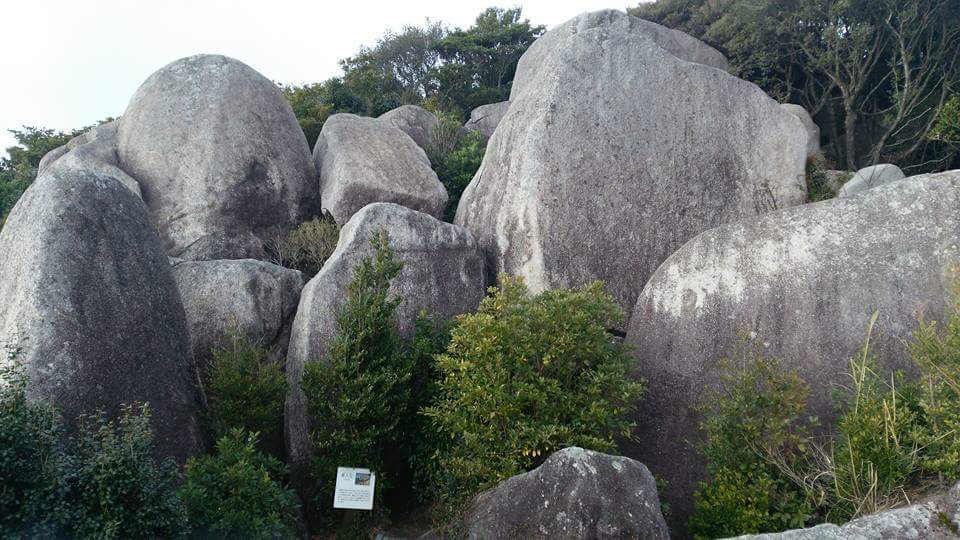
The southern tip of Shikoku is one of the most remote and rewarding corners of Japan. The journey takes over two and a half hours from Kochi City — and that distance keeps the crowds away. What awaits is a full day of extraordinary experiences: the mysterious hilltop megalith field of Tojindaba, the UNESCO-designated rock coast of Tatsukushi with its coral-rich waters and underwater observatory, the dramatic 80-meter cliffs of Cape Ashizuri, the bronze statue of John Manjiro gazing toward America, and the expansive grounds of Kongofukuji Temple — the 38th stop on the Shikoku Pilgrimage.
Stay overnight at the Ashizuri Onsen resort area and watch the sunrise over the Pacific from the cape the following morning.
Read our full guide: Cape Ashizuri Guide: Tojindaba, Tatsukushi & Kongofukuji
Kochi’s Food Culture
Food in Kochi is inseparable from its social culture. The prefecture consistently ranks at the top of Japan’s per-capita alcohol consumption, and its “okyaku” tradition — welcoming strangers to communal banquets — has shaped a culinary identity that is bold, generous, and deeply local.
Katsuo no Tataki — Straw-Seared Bonito
The undisputed dish of Kochi. Fresh bonito is seared over blazing rice straw — creating a smoky, charred exterior around a raw ruby-red center — then sliced thick and served with garlic, ginger, and Kuroshio sea salt. The best place to try it is Hirome Market, where vendors sear each piece to order in front of you.
Sawachi Ryori — The Communal Platter
Kochi’s traditional banquet format: sashimi, sushi, grilled fish, and seasonal dishes arranged on a single enormous platter and shared by the whole table. The style was born specifically so everyone at an okyaku could participate equally without anyone needing to leave the table to serve. It remains the foundation of Kochi celebration food.
Wild River Fish — Ayu and Unagi
The Shimanto and Niyodo rivers produce wild-caught ayu (sweetfish) and wild eel of extraordinary quality. Wild Shimanto eel — firm, clean-flavored, caught using ancient bamboo trap techniques — commands prices three times higher than farmed eel and is worth every yen. Ayu season runs from June to October; eel from April to September.
Citrus — Buntan, Ponkan, and Yuzu
Kochi is one of Japan’s top citrus-producing prefectures. Buntan (pomelo) is the star — a large, mild citrus with a thick rind and clean, lightly sweet flesh, grown primarily in the Tosa area. Ponkan is a tangerine-style citrus, rich and easy to peel, popular across the prefecture in winter. Yuzu, grown in the mountain villages of Ino Town and Umaji, appears in ponzu, dressings, confectionery, and sake throughout the year. Together, these three citrus fruits define the fragrant, refreshing character of Kochi’s cuisine.
Tosa Sake
Kochi is home to some of Japan’s most respected sake breweries, including Tsukasabotan and Tosatsuru. Dry, clean, and designed to accompany food rather than overpower it, Tosa sake is the natural companion to katsuo and sashimi — and to the long, convivial evenings that Kochi’s culture demands.
Getting to Kochi
By Air
Kochi Ryoma Airport receives direct flights from Tokyo (Haneda), Osaka (Itami), Nagoya, and Fukuoka. The airport limousine bus connects to Kochi City center in approximately 35 minutes.
By Train
From Okayama (on the Tokaido/Sanyo Shinkansen), the JR limited express “Nanpu” or “Shimanto” reaches Kochi Station in approximately 2 hours 30 minutes. From Osaka, the total journey by Shinkansen to Okayama plus limited express is around 3 hours.
🚃 JR All Shikoku Rail Pass
For travelers exploring multiple destinations across Shikoku, the JR All Shikoku Rail Pass offers unlimited travel on all JR Shikoku lines — including limited express trains to Kochi, the Shimanto River trolley train, and the Gomen-Nahari Line to Cape Muroto. Available in 3, 4, 5, and 7-day options.
By Highway Bus
Highway buses connect Kochi with Osaka, Tokushima, and other major cities. The journey from Osaka takes approximately 5.5 hours.
Getting Around Kochi
For Kochi City sights — Kochi Castle, Katsurahama, and Godaisan — the MY遊バス tourist loop bus is the most convenient option. A day pass costs ¥1,000 and covers unlimited rides.
However, for Kochi’s most spectacular natural destinations — the Niyodo River, Shimanto River, Cape Ashizuri, and Cape Muroto — a rental car is essential. Public transport to these areas is infrequent and impractical. Rental car offices are located at Kochi Station and Kochi Ryoma Airport.
Kochi Day Trip by Chartered Car
🚗 Kochi Chartered Car — Katsurahama & Surroundings
For a flexible, fully guided day trip covering Katsurahama, Makino Botanical Garden, Chikurin-ji Temple, and Godaisan Observatory, a chartered car tour is an excellent option. The itinerary is customizable to suit your interests and pace.
River Activities
🌊 Shimanto River Rafting
Experience the Shimanto River from the water on a guided rafting tour. Suitable for beginners and families, with all equipment provided.
Best Time to Visit Kochi
Yosakoi Festival (August 10–11) is Kochi’s most celebrated event. Approximately 200 teams dance through the city’s streets and arcades over two days, each performing choreographed routines with wooden clappers called naruko. Over one million people attend. If your travel dates are flexible, this is the most vibrant time to visit Kochi City.
Autumn (October–November) is arguably the best all-round season. The Niyodo River’s blue-green color is at its most striking against autumn foliage. The Shimanto River is running clear. Cape Ashizuri offers stable weather and excellent visibility. Crowds are moderate and the temperature is comfortable throughout the prefecture.
Spring (March–May) is pleasant and uncrowded. Cherry blossoms at Kochi Castle are excellent in late March. The Niyodo River and Shimanto River are at good levels after winter rainfall.
Winter (January–February) brings the camellia season at Cape Ashizuri, the clearest ocean views, and the fewest tourists. It is cold in the mountains, but the coast remains mild. Furthermore, winter is the best season for the “daruma sunrise” mirage at Cape Muroto.
Summer (June–August) is the season for river activities — kayaking on the Shimanto, swimming in the Niyodo, torchlit ayu fishing. However, typhoon season runs from August through October, so monitor weather forecasts closely.
Sample Itineraries
1-Day Itinerary — Kochi City Essentials
Morning: Kochi Castle (one of Japan’s twelve remaining original castles, 60–90 minutes). Late morning: MY遊バス to Katsurahama — Ryoma statue, Ryoma Memorial Museum, Katsurahama Aquarium (2–3 hours). Late afternoon: return to the city, walk the Obiyamachi Arcade. Evening: Hirome Market for katsuo no tataki, local sake, and Kochi hospitality.
2–3 Day Itinerary — Kochi Highlights
Day 1 — Kochi City: Kochi Castle → Katsurahama → Hirome Market (as above).
Day 2 — Niyodo River: Rent a car from Kochi City. Drive to Niko Fuchi (arrive before 9 AM) → Yasui Gorge → Suisho Fuchi → return to Kochi City for dinner.
Day 3 — Shimanto River or Cape Ashizuri: For Shimanto, drive west to Nakamura (2 hours), visit submersible bridges, take the trolley train, eat wild eel at Shimantoya. For Cape Ashizuri, depart early (7:30 AM), drive south via Tojindaba → Tatsukushi → SATOUMI → Cape Ashizuri → Kongofukuji, and stay overnight at Ashizuri Onsen.
Where to Stay in Kochi
For most visitors, Kochi City makes the best base — it offers the widest range of accommodation, dining, and transport connections. For the Cape Ashizuri area, staying overnight at the Ashizuri Onsen resort is strongly recommended given the distance from the city.
🏨 JR Clement Inn Kochi
Directly connected to Kochi Station, this hotel offers the most convenient access to limited express trains, rental cars, and the MY遊バス. An excellent base for exploring the entire prefecture.
🏨 Dormy Inn Kochi — Natural Hot Spring Konpeki-no-Yu
A reliable business hotel with a natural hot spring bath on the top floor. After long days driving Kochi’s mountain roads, the onsen is a genuine pleasure.
🏨 Tosagyoen Ryokan (土佐御苑)
A traditional ryokan offering tatami rooms and kaiseki cuisine with local Kochi ingredients. The most immersive way to experience Tosa hospitality in the city.
🏨 Hotel Takasago (ホテル高砂)
A well-located mid-range option in central Kochi, within easy reach of Hirome Market and the city’s shopping arcades.
🏨 Ashizuri Kokusai Hotel — Cape Ashizuri Area
For visitors spending the night near Cape Ashizuri, this established onsen hotel offers Pacific-facing rooms and hot spring facilities. Watching the sunrise over the ocean from here the following morning is worth the extra night.
🏨 Ashizuri Sunnyside Hotel — Cape Ashizuri Area
A well-regarded option near Cape Ashizuri combining comfortable accommodation with hot spring access and convenient proximity to Kongofukuji Temple.
Frequently Asked Questions
How many days do I need in Kochi Prefecture?
A minimum of 3 days allows you to cover Kochi City (Hirome Market, Katsurahama), the Niyodo River, and either the Shimanto River or Cape Ashizuri. For a more thorough experience including Cape Muroto, allow 4 to 5 days. Kochi rewards slow travel — the best experiences here cannot be rushed.
Do I need a rental car in Kochi?
Yes, for most of Kochi’s top natural attractions. The Niyodo River gorges, Shimanto River bridges, Cape Muroto, and Cape Ashizuri are all difficult or impossible to reach efficiently by public transport. A rental car from Kochi Station or Kochi Ryoma Airport is strongly recommended. Kochi City sights (Katsurahama, Kochi Castle) can be managed with the MY遊バス day pass (¥1,000).
What is Kochi’s most famous food?
Katsuo no tataki — straw-seared bonito — is Kochi’s signature dish and one of the most distinctive foods in all of Japan. The best place to try it is Hirome Market in Kochi City, where it is seared fresh to order. Other notable Kochi foods include wild river eel from the Shimanto, buntan and ponkan citrus, sawachi ryori communal platters, and dry Tosa sake.
What is the best season to visit Kochi?
Autumn (October–November) offers the best overall conditions: comfortable temperatures, the Niyodo River at its most photogenic with autumn foliage, and stable weather throughout the prefecture. Spring (March–May) is also excellent and less crowded. Summer brings river activities and the Yosakoi Festival but also typhoon risk. Winter is ideal for Cape Ashizuri camellias and Cape Muroto’s clearest skies.
What is the Yosakoi Festival?
The Yosakoi Festival is Kochi’s biggest annual event, held on August 10 and 11. Approximately 200 teams perform choreographed dance routines through the city’s streets and arcades, each dancer holding wooden clappers called naruko. Over one million visitors attend across the two days. It is one of the most exhilarating festivals in Japan and the defining expression of Kochi’s energetic local culture.
Is Kochi worth visiting for non-Japanese speakers?
Yes. Kochi’s main attractions — natural landscapes, food markets, historical sites — are fully accessible and rewarding regardless of language ability. Key sites including Cape Muroto’s Geopark Center and the Sakamoto Ryoma Memorial Museum have English-language exhibits. Hirome Market communicates through food and goodwill rather than language. A basic phrase or two in Japanese goes a long way in this particularly welcoming prefecture.